
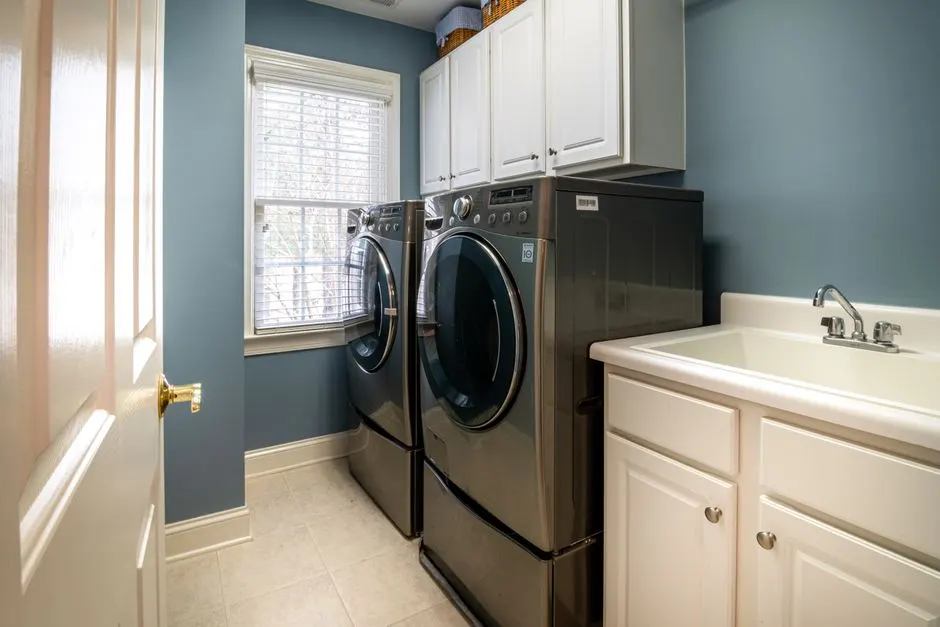
Washer leaks in older Massachusetts homes most often come from aging rubber hoses, corroded or stiff laundry shutoff valves, and drain connections that no longer fit securely. The washer itself can also leak from a worn pump, door seal, or water inlet, so the leak's location and timing matter. Washer leak repair older homes Massachusetts homeowners need starts with identifying which connection releases water before replacing parts. We explain the common causes, safe first checks, and the signs that call for a repair visit; our team provides Washer Repair in Massachusetts for homes with old and new laundry hookups.
Washer leak repair older homes Massachusetts is appliance repair that locates and stops water escaping from a washer or its immediate connections before it damages floors, walls, or nearby rooms. In older houses, identifying the source matters as much as the repair because a machine hose and a household pipe can leave similar puddles.
Why do washers leak more often in older Massachusetts homes?
Older Massachusetts homes see more washer leaks because original plumbing, replacement machines, and decades-old laundry hookups often meet in a tight space. A 1940s basement may have a new high-efficiency washer connected to old threaded valves and a drain standpipe that was installed for a different machine.
Age alone does not prove a connection is failing. But rubber hoses dry and weaken, metal fittings corrode, and valves that rarely move can become hard to operate or begin seeping around the stem. In freezing New England winters, an unheated basement also raises the risk of brittle hoses or water lines exposed to cold air.
Common washing machine leak causes in older homes include:
- Rubber fill hoses with bulges, cracking, or loose end washers.
- Supply valves that leak at the handle, stem, or threaded connection.
- A drain hose that has slipped out of the standpipe or a standpipe that backs up during pumping.
- A washer door boot, tub seal, pump, or inlet valve that leaks during a specific part of the cycle.
We check the appliance and its connections separately rather than assuming the oldest-looking part is the culprit. That distinction is useful in communities with older housing stock, including homeowners looking for Washer Repair in Boston, where basement laundry areas and renovated utility spaces often have a mix of old and new fittings.
Which washer connections should you check first?
In an older Massachusetts laundry area, inspect the two fill hoses, shutoff valves, and drain hose first because those connections are accessible and can leak without a washer component failing. Use a flashlight and check while the machine is off; do not pull a heavy washer across an uneven or damp floor by yourself.
Look closely at each hose from end to end. A stainless braided hose is not automatically leak-proof, and a rubber hose with a bulge or surface crack should be replaced rather than tightened. Many manufacturers recommend replacing rubber fill hoses every 3 to 5 years; follow your washer's manual and replace any hose that shows damage now.
For a basic hose check, you can:
- Look for moisture or mineral residue around each hose nut and valve stem.
- Check that the hose is not kinked, stretched, crushed, or rubbing against a sharp edge.
- Place dry paper towels beneath the connections, then run a short fill cycle while watching from a safe position.
Do not force a stuck valve. Older shutoffs can break or start leaking when a corroded handle is turned hard; if the valve will not move smoothly, stop and have it assessed. Our team performs Washer Leak Repair in Massachusetts by tracing the water source, repairing the washer-side fault, and checking the line under operation.
How can you tell whether the washer or drain connection is leaking?
You can often tell whether a washer or drain connection is leaking by noting when water appears: a leak during filling points toward a supply hose, valve, or inlet, while water escaping during draining points toward the drain hose, standpipe, or pump. The cycle timing is a valuable clue, not a final diagnosis.
Start with the floor dry and watch one cycle without reaching behind a running machine. If water appears before the drum begins turning, inspect the fill side. If it appears as the washer empties, check whether the standpipe overflows or the drain hose shifts under the surge.
A washer drain connection leak often leaves water near the wall or floor drain rather than directly below the front of the machine. A standpipe that is too narrow, partly blocked, or poorly secured may spill only when the pump sends out a full stream. If the pipe overflows, stop the cycle; repeated flooding can damage basement flooring and the ceiling below an upstairs laundry room.
A puddle centered under the washer can come from an internal part. Front-load machines often leak at a damaged door boot, especially when a small item catches in the seal; top-load models can leak from an inlet, tub, or pump connection. If you see water only during a spin or drain stage, the fault may involve the pump or drain path, and our Washer Drainage and Pump Repair in Massachusetts service addresses those failures.
What should you do when a washer leaks?
When a washer leaks in an older Massachusetts home, stop the cycle, cut power safely, and close the laundry water valves if they turn without force. Keep people away from standing water near electrical outlets, extension cords, or the washer's power connection.
If the plug and outlet are dry and accessible, unplugging the washer can prevent it from continuing to run. Never step into water to reach an outlet or touch a wet appliance. If water is spreading quickly, use the home's main water shutoff only if you know where it is and can reach it safely.
Take a photo of the wet area and note whether the leak began during filling, washing, draining, or spinning. Those details help us narrow down the problem faster. If the water comes from a valve or pipe in the wall rather than the washer hose, a plumber may need to repair the home's plumbing connection.
Drying the floor is important, but do not restart the machine just to reproduce a leak that is already active. A slow seep can soak under vinyl or laminate before it becomes visible, and repeated testing can turn a small repair into water damage.
Common mistakes that make washer leaks worse
In older Massachusetts laundry rooms, overtightening fittings and continuing to run a leaking washer are two common mistakes that can make the damage worse. A hose nut needs a secure connection, not enough force to crack a plastic inlet or distort a washer gasket.
We also see drain hoses pushed too far into standpipes, loosely taped in place, or routed so low that water siphons out during a cycle. Follow the washer manufacturer's drain-height and hose-insertion instructions; many models specify a standpipe height within a range around 30 to 96 inches, but the correct limits depend on the model.
Watch out for these shortcuts:
- Wrapping a leaking valve with tape instead of replacing a failed fitting.
- Using a clamp or sealant to hide a split hose.
- Assuming water near the drain is harmless because the washer finishes its cycle.
One short test after a repair is sensible. Repeated cycles on a wet floor are not.
When should you call a washer leak repair professional?
Call for washer leak repair in an older Massachusetts home if water returns after you dry the floor, a shutoff valve seeps, a hose is damaged, or the leak comes from inside the machine. A fast-moving leak, water near electricity, or an overflowing standpipe needs immediate attention rather than another wash cycle.
We inspect hoses, valves, the drain connection, and the washer's internal leak points, then test the machine to confirm where water escapes. For typical 2026 pricing in this area, a diagnostic visit and straightforward washer-side repair can fall around $150 to $350, while a pump, door boot, or more involved part replacement can bring the total to roughly $250 to $600 or more; the appliance model and parts determine the final price. We explain the repair cost before proceeding.
If the appliance is leaking, Mass Washer Repair can help you find the source and get the laundry area dry again. We serve Massachusetts homeowners with practical Washer Repair in Worcester, including older homes where a washer and its plumbing connections need to be checked together.
Frequently Asked Questions
Can old washer hoses cause leaks in older homes?
Yes. Rubber washer hoses can crack, bulge, or fail at the gasket as they age; inspect them at least once a year and replace damaged hoses immediately. Many manufacturers recommend replacing rubber hoses every 3 to 5 years. Braided hoses also need inspection because their fittings and inner liners can fail.
How can I tell if a washer leak is from the drain connection?
Water appearing during the drain phase, especially at the wall standpipe or floor drain, points toward a drain connection problem. Dry the floor, observe one supervised cycle, and note whether the standpipe overflows or the hose shifts. Stop testing if water spreads or reaches an electrical area.
Should I shut off laundry water valves when a washer leaks?
Yes, close both laundry supply valves if you can turn them gently and reach them safely. Do not force a corroded or stuck valve, since it can break or begin leaking. If water is near electricity, avoid the area and shut off power from a dry, safe location.
When should I call a washer leak repair technician in Massachusetts?
Call when a leak returns, a hose or valve is visibly damaged, water comes from inside the washer, or the drain overflows. Treat active flooding or water near electrical equipment as urgent. A technician can identify whether the fault is in the appliance or its laundry connection and test the repair.
Get help with Washer Repair in Massachusetts
A washer leak can damage floors quickly, especially where old valves and drain connections sit behind finished walls or beneath a second-floor laundry. Call Mass Washer Repair at +18665940052 to arrange help finding and fixing the source.